

Understanding Relapse as a Process, Not an Event
One of the most important reconceptualizations in modern addiction science is understanding relapse not as a single moment of weakness but as a gradual process that unfolds over days, weeks, or even months before substance use actually occurs. The National Institute on Drug Abuse estimates that 40-60% of individuals in recovery experience relapse at some point, a rate comparable to other chronic medical conditions like hypertension (50-70%) and asthma (50-70%).
This comparison is not meant to normalize relapse but to place it in proper medical context. Just as a diabetic's blood sugar spike does not mean diabetes treatment has "failed," a relapse does not erase the progress made in recovery or indicate that treatment is futile. Rather, it signals that the treatment plan needs adjustment, perhaps more intensive support, medication changes, or different therapeutic approaches.
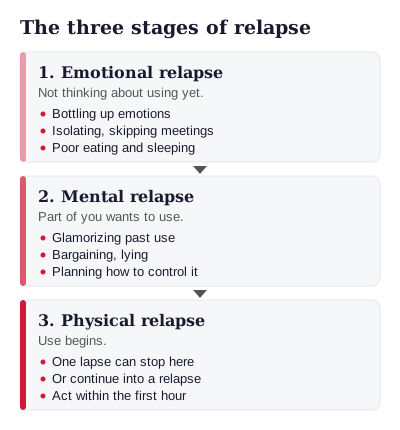
Researchers have identified three distinct stages of relapse: emotional relapse (when feelings and behaviors set the stage for potential use, even without conscious thoughts about using), mental relapse (when part of the mind begins entertaining thoughts about using while another part resists), and physical relapse (when actual substance use occurs). Effective prevention strategies target all three stages, with the greatest opportunity for intervention occurring in the earlier stages before the momentum toward use becomes difficult to reverse.

Identifying Your Personal Triggers
Triggers are the internal and external cues that activate cravings and increase vulnerability to relapse. They are highly individual, which is why personalized trigger identification is a cornerstone of effective cognitive-behavioral therapy for addiction.
External triggers include people (former using companions, dealers), places (bars, neighborhoods associated with use, specific rooms), things (paraphernalia, certain music, TV shows depicting use), situations (parties, stressful meetings, paydays), and times (evenings, weekends, anniversaries of losses).
Internal triggers are emotional or physical states that increase vulnerability: stress, anxiety, depression, loneliness, boredom, anger, hunger, fatigue, chronic pain, and feelings of celebration or overconfidence ("I've been sober for six months, I can handle just one drink").
Creating a comprehensive personal trigger inventory is a practical exercise that yields immediate protective benefits. Write down every situation, emotion, person, place, and time you associate with past substance use. For each trigger, develop a specific response plan: who will you call, where will you go, what coping technique will you use? This pre-planning means you don't have to make critical decisions in moments of high emotional arousal when judgment is most compromised.
The HALT acronym provides a simple daily check-in framework: Am I Hungry, Angry, Lonely, or Tired? These four states are among the most common relapse precursors, and addressing them promptly, eating a meal, processing anger with a sponsor, reaching out to a friend, or going to bed, can prevent emotional distress from escalating toward substance use.
Cognitive-Behavioral Strategies for Craving Management
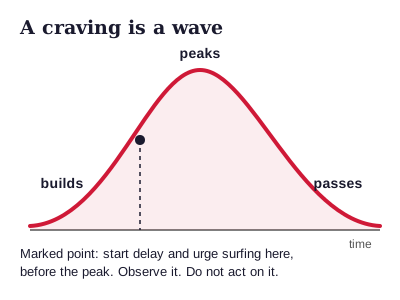
Cravings are neurological events, not character flaws. Understanding their biology empowers you to respond effectively rather than reactively. Cravings typically follow a wave-like pattern: they build, peak, and subside, usually within 15-30 minutes. This means that if you can "surf" the craving without acting on it, it will pass.
Urge surfing is a mindfulness-based technique developed by psychologist Dr. Alan Marlatt. Rather than fighting or suppressing a craving (which often intensifies it), you observe it with curious detachment: notice where you feel it in your body, describe its qualities (intensity, location, movement), and watch it peak and fade without engaging with it. With practice, this technique builds confidence that cravings are temporary experiences you can tolerate.
Cognitive restructuring targets the distorted thinking patterns that precede relapse. Common cognitive distortions include:
- Euphoric recall: Selectively remembering the pleasurable effects of substance use while minimizing the devastating consequences
- "Just this once" thinking: Believing you can use once without consequences or return to controlled use
- Testing personal control: Deliberately putting yourself in triggering situations to "prove" you can handle it
- Catastrophizing: Blowing a setback out of proportion ("I lost my job, so recovery doesn't matter anymore")
When you notice these thought patterns, challenge them directly: "What happened the LAST time I told myself 'just this once'?" "If I use tonight, how will I feel tomorrow morning?" "Would I advise a friend in my situation to do what I'm considering?" These reality-testing questions engage the rational prefrontal cortex and counter the emotional hijacking that drives impulsive decisions.
Delay and distract: When a craving hits, commit to waiting 30 minutes before acting on it. During that time, engage in a competing activity: call your sponsor, go for a walk, do 20 pushups, take a cold shower, write in your journal, or play the tape forward (vividly imagining the full consequences of using, not just the first 15 minutes of relief).
Need Help Finding Treatment?
Our counselors are available 24/7 to help you find the right program.

Building a Strong Recovery Support Network
Isolation is one of the most dangerous states in recovery. Research from SAMHSA consistently shows that individuals with strong social support networks have significantly lower relapse rates than those who attempt to maintain sobriety in isolation. Building a recovery support network is not optional, it is essential infrastructure for sustained sobriety.
12-Step and mutual aid groups including Alcoholics Anonymous, Narcotics Anonymous, and SMART Recovery provide accessible, ongoing peer support. Regular meeting attendance creates structure, accountability, and connection with others who understand the challenges of recovery from lived experience. Finding the right support group may take some exploration, different groups have different cultures and approaches, and what resonates for one person may not work for another.
A sponsor or recovery mentor provides personalized guidance from someone further along in the recovery journey. This relationship offers accountability, modeling of recovery skills, and someone to call during difficult moments. Don't wait until a crisis to establish this connection, reach out early and build the relationship during stable times.
Family and close friends who support your recovery are invaluable, but they may need education about how to help most effectively. Family programs and Al-Anon can help loved ones understand addiction, set healthy boundaries, and provide support without enabling.
Professional ongoing care including regular therapy sessions, psychiatric medication management (if applicable), and structured aftercare programs provide expert guidance through the challenges that arise in sustained recovery. Don't discontinue professional support prematurely, research shows that ongoing engagement significantly reduces relapse risk.
Lifestyle Foundations for Long-Term Recovery
Recovery is built on daily habits, not occasional heroic acts of willpower. Research supports several lifestyle practices that strengthen recovery resilience and reduce relapse risk.
Regular physical exercise is one of the most powerful, and underutilized, tools in recovery. Exercise stimulates endorphin release, reduces stress hormones, improves sleep quality, builds self-efficacy, and provides a natural source of the reward that substances once supplied. A meta-analysis published in PLOS ONE found that regular exercise significantly reduced substance use and cravings across multiple substance types.
Nutrition plays a critical role in brain recovery. Substance use depletes neurotransmitter precursors, vitamins, and minerals essential for healthy brain function. A diet rich in protein, omega-3 fatty acids, complex carbohydrates, and micronutrients supports neurological healing. Reduce sugar and caffeine, which can trigger mood swings and anxiety.
Quality sleep is essential but often disrupted in early recovery. Establish consistent sleep and wake times, avoid screens before bed, create a cool and dark sleeping environment, and avoid caffeine after noon. Sleep disturbance is a documented relapse risk factor, address it proactively rather than enduring it passively.
Mindfulness and meditation have accumulated a strong evidence base for relapse prevention. Mindfulness-Based Relapse Prevention (MBRP) has been shown in randomized controlled trials to reduce heavy drinking days and drug use compared to standard relapse prevention approaches. Even 10-15 minutes of daily practice builds the awareness and equanimity that buffer against impulsive decisions.
Structured routine provides predictability and reduces the idle, unstructured time where cravings often flourish. Establish regular schedules for meals, exercise, meetings, therapy, social connection, and productive activity. Boredom is a surprisingly potent relapse trigger, and intentional scheduling is the antidote.
Take the First Step Today
Evidence shows early intervention leads to better outcomes. Speak with a specialist now.
Creating an Emergency Relapse Prevention Plan
Every person in recovery should have a written relapse prevention plan, a concrete document developed collaboratively with their therapist, sponsor, and support network. This plan should be specific, practical, and readily accessible during moments of crisis.
Your plan should include:
- Warning signs: Your personal early indicators of emotional relapse (isolation, skipping meetings, irritability, poor self-care)
- Trigger list: Specific people, places, situations, and emotional states that increase your vulnerability
- Coping strategies: Concrete actions for each category of trigger (e.g., "If I feel lonely → call [name], attend a meeting, go to the gym")
- Emergency contacts: Sponsor, therapist, crisis line, trusted friends/family, with actual phone numbers
- Safe places: Locations where you can go to feel safe and supported (meeting locations, friend's home, gym, library)
- Medication information: Current medications, prescribing physician contact, pharmacy
- Reasons to stay sober: A personal list of the people, goals, and values that motivate your recovery
Keep a copy on your phone, give copies to your sponsor and close family members, and review it regularly. Like a fire escape plan, its value lies in being prepared before the emergency occurs.
If you do experience a relapse, respond with urgency rather than despair. Contact your treatment team immediately, be honest with your support network, and re-engage with treatment at the appropriate level. Recovery is not a pass-fail test, it is an ongoing process of growth, and setbacks can become the foundation for deeper understanding and stronger resolve.
When to Seek Additional Help
Some situations call for intensified professional support. Recognize when self-help strategies alone are insufficient and seek additional care if you experience: persistent cravings that self-management techniques cannot adequately control; worsening mental health symptoms including depression, anxiety, or suicidal thoughts; increasing isolation or deterioration of your support network; returning to people, places, or behaviors associated with active use; actual substance use (even a single instance); or a significant life stressor such as job loss, relationship ending, or bereavement.
Stepping up to a more intensive level of care, from outpatient to IOP, or from IOP back to PHP or residential, is not failure. It is a rational, evidence-based response to changing circumstances. The flexibility to move between levels of care is one of the strengths of the modern treatment continuum.
Call any time you feel your recovery is at risk. Our counselors can help you assess your current situation, adjust your support plan, and connect with resources that match your needs. This service is free, confidential, and available 24 hours a day, 7 days a week.
Relapse Prevention Plan Example
A plan is easier to write when you have seen one. The example below is an illustration, not a real patient. It shows the level of detail that makes a plan usable at two in the morning: names, phone numbers, addresses and sentences that start with "if".
| Part of the plan | Example entry |
|---|---|
| My early warning signs | I stop answering texts. I skip the Thursday meeting twice in a row. I sleep past ten. I start saying "I'm fine" to everyone. |
| My triggers | Payday Fridays. Driving past the liquor store on Elm Street. Arguments with my brother. Being alone in the apartment after 9 p.m. |
| If-then responses | If it is payday, then I transfer rent before I leave work. If I argue with my brother, then I walk for twenty minutes before I do anything else. If I am alone after nine and restless, then I call Maria or go to the late meeting. |
| People I call | Maria, sponsor, mobile number written here. Dr. Lee's office, weekday number written here. After hours: the 988 Suicide and Crisis Lifeline. |
| Safe places | The community center gym until it closes. My sister's house. The 7 a.m. meeting at the church on Oak Avenue. |
| Medication | Naltrexone, taken with breakfast. Refill due on the 3rd. Pharmacy phone written here. |
| Why I am doing this | Saturday mornings with my daughter. Keeping the job I started in March. Not lying to my mother again. |
| If I use | I stop. I tell Maria the same day. I do not drive. I call Dr. Lee the next morning and ask whether my level of care should change. |
Notice what the example leaves out. There are no vague goals such as "avoid stress" or "stay positive". Every line is something a tired, frightened person could act on without having to think.
Relapse prevention plan template you can print
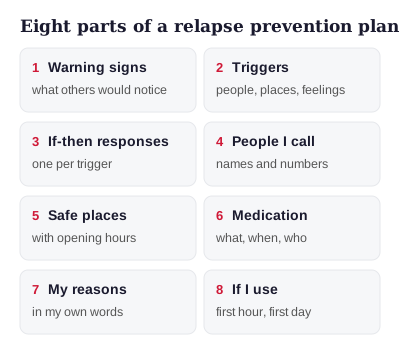
Use the eight headings from the example as a worksheet. You can download the one-page relapse prevention plan worksheet (PDF) or copy the headings by hand:
- My early warning signs (three to five behaviors other people could see)
- My triggers (people, places, times, feelings)
- My if-then responses (one for each trigger)
- People I call (names and numbers, in the order I will call them)
- Safe places (with opening hours)
- Medication (what, when, who prescribes it)
- Why I am doing this (three reasons in my own words)
- If I use (what I do in the first hour and the first day)
Fill it in with your therapist, sponsor or a person you trust. A plan written with someone else is a plan that at least one other person knows about.
How to write an if-then response
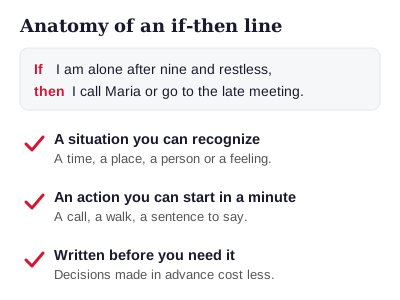
Psychologists call these implementation intentions. The format is fixed: "If [situation], then I will [action]." The situation has to be concrete enough to recognize, and the action has to be something you can start within a minute. "If I feel a craving, then I will cope" fails on both counts. "If I am offered a drink at the wedding, then I say 'I'm driving' and go find my cousin" passes.
What to Do in the First 24 Hours After a Relapse
What to do after a relapse comes down to the first day. The hours after a lapse decide how long it lasts. Work through these steps in order.
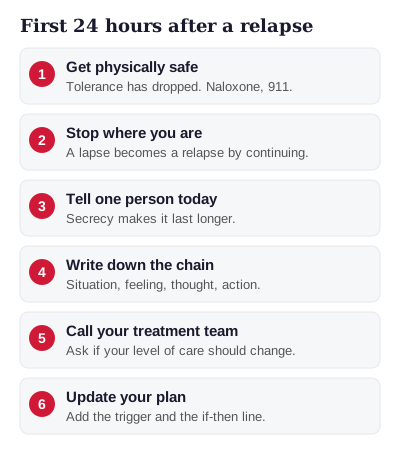
- Make sure you are physically safe. Tolerance drops during abstinence. NIDA warns that a person who uses as much of the drug as they did before quitting "can easily overdose because their bodies are no longer adapted to their previous level of drug exposure." If opioids are involved, keep naloxone within reach and do not use alone. Call 911 for any sign of overdose.
- Stop where you are. One drink or one dose is a lapse. It becomes a relapse when it continues. Pour it out, leave the place, hand your keys or your card to someone.
- Tell one person today. Secrecy is what turns a bad night into a bad month. A sponsor, a counselor, a sibling: the choice matters less than the timing.
- Write down the chain. Where were you, what were you feeling, what did you tell yourself, what did you do next? You are looking for the earliest link you could have broken.
- Call your treatment team the next working day. Ask plainly whether your level of care should change. Moving from weekly outpatient to intensive outpatient for a few weeks is an adjustment, not a punishment.
- Update your plan. Add the trigger you missed and the if-then response you needed.
If you have used several times in one day, treat it as one episode and start at step one. The count matters less than what you do in the next hour.
Lapse versus relapse, and the abstinence violation effect
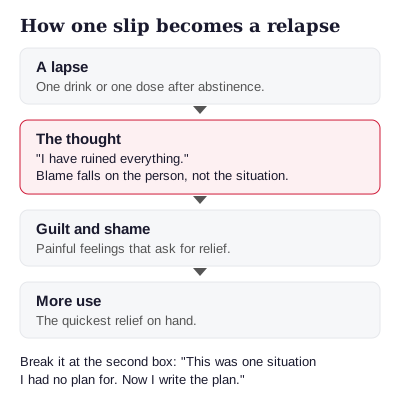
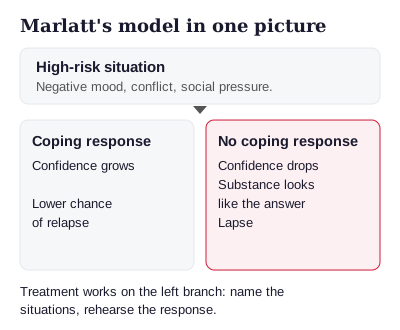
Alan Marlatt's research group described a trap they called the abstinence violation effect. After a first slip, people who blame it on personal failure "are likely to experience guilt and negative emotions that can, in turn, lead to increased drinking as a further attempt to avoid or escape the feelings of guilt or failure" (Larimer, Palmer and Marlatt, 1999). In other words, "I've ruined everything" is the thought that does the damage. The same paper treats a lapse as a learning opportunity produced by a specific situation and a specific gap in coping, both of which can be changed.
Relapse Prevention Strategies That Do Not Work
Some approaches feel protective and are not. Knowing them saves months.
Willpower with no plan
Gritting your teeth works until the first bad day. Marlatt's model puts the weight on coping skills for specific high-risk situations, not on strength of character. In his group's analysis, negative emotional states and conflicts with other people triggered more than half of all relapse episodes. A plan names those situations in advance.
Testing your control
Going to the bar "to prove I can" or keeping a bottle in the house as a trophy is a known step toward use, not away from it. Melemis lists "thinking of schemes to better control using" among the signs of mental relapse.
Detox and nothing after it
Detox clears the body. It does not teach a single skill on this page. NIDA states that "detoxification is not the same as treatment and is not sufficient to help a person recover."
Shame as motivation
Harsh self-talk after a slip feeds the abstinence violation effect described above. Honesty about what happened helps. Self-punishment does not.
Handling it alone
Two of the five rules of recovery are "be completely honest" and "ask for help". Isolation appears on Melemis's list of the first signs of emotional relapse, alongside bottling up emotions and skipping meetings.
The Models Behind Relapse Prevention
Most of the advice in this article comes from three bodies of work. Knowing which is which helps when a therapist names one of them.
Marlatt's cognitive-behavioral model
The original relapse prevention model, developed by G. Alan Marlatt and Judith Gordon in the 1980s. Its building blocks are high-risk situations, coping skills, self-efficacy, expectations about what the substance will do, and the abstinence violation effect. Treatment based on it means identifying your own high-risk situations, rehearsing responses and learning to manage lapses.
The five rules of recovery
Steven Melemis condensed clinical practice into five rules in a 2015 paper in the Yale Journal of Biology and Medicine: change your life, be completely honest, ask for help, practice self-care, and don't bend the rules. He also notes that post-acute withdrawal symptoms can come and go for up to two years, which is why a plan has to outlast the first good month. Read the full paper on PubMed Central.
Mindfulness-based relapse prevention
MBRP adds meditation practice to Marlatt's skills. In a randomized trial of people in aftercare, both standard relapse prevention and MBRP beat treatment as usual at six months. At twelve months, MBRP participants reported significantly fewer days of substance use and less heavy drinking than either other group (Bowen et al., JAMA Psychiatry, 2014).
Relapse Prevention by Substance and Behavior
The skills are shared. The risks and the medical tools differ.
| What you are recovering from | What changes in the plan |
|---|---|
| Alcohol | Three medications are approved by the FDA to treat alcohol use disorder: naltrexone, acamprosate and disulfiram (NIAAA). Ask about them. Social drinking occasions need their own if-then lines. |
| Opioids | The main danger of a lapse is overdose, because tolerance has fallen. The plan should name where naloxone is kept and who knows how to use it. Medication treatment is covered in our guide to opioid treatment. |
| Stimulants | Behavioral treatment carries most of the load. Contingency management, which rewards verified abstinence, is listed by 4,702 of the programs in our directory. Sleep and daily structure deserve extra lines in the plan. |
| Gambling, pornography, binge-watching and other behaviors | The same model applies: triggers, urges that rise and pass, if-then responses. Money and device access take the place of "people and places". Where full abstinence is impossible, as with the internet, set limits with a therapist and write them down. |
Relapse prevention in depression, bipolar disorder and psychosis
The term is also used in mental health care, where it means preventing a new episode of illness. For recurrent depression, a pooled analysis of 1,258 patients found that mindfulness-based cognitive therapy lowered the risk of relapse over 60 weeks (hazard ratio 0.69) compared with not receiving it (Kuyken et al., JAMA Psychiatry, 2016). For bipolar disorder and psychosis, plans are built around personal early warning signs, regular sleep and avoiding substances, and they are written with the treating psychiatrist. If you live with both a mental health condition and substance use, you need one plan that covers both. See dual diagnosis treatment.
How Many Treatment Programs Teach Relapse Prevention
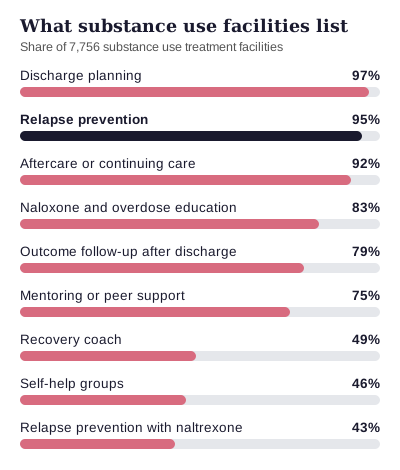
We counted. SAMHSA collects facility profiles with two questionnaires: one for substance use treatment facilities and one for mental health facilities that also treat addiction. Relapse prevention, aftercare and discharge planning are asked only on the first, so we count them among the 7,756 programs in our directory that answered it. Nearly all of them, 7,406 programs or 95%, list relapse prevention among their treatment approaches.
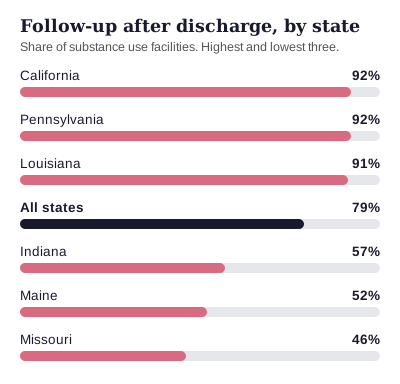
Programs differ in what happens after discharge. Discharge planning is close to universal at 97%. Follow-up after discharge is listed by 79%, a recovery coach by 49% and naltrexone for relapse prevention by 43%.
| Listed in the SAMHSA profile | Facilities | Share of 7,756 |
|---|---|---|
| Discharge planning | 7,554 | 97% |
| Relapse prevention (treatment approach) | 7,406 | 95% |
| Aftercare or continuing care | 7,145 | 92% |
| Naloxone and overdose education | 6,456 | 83% |
| Outcome follow-up after discharge | 6,109 | 79% |
| Mentoring or peer support | 5,817 | 75% |
| Recovery coach | 3,795 | 49% |
| Self-help groups | 3,534 | 46% |
| Relapse prevention with naltrexone | 3,316 | 43% |
Follow-up after discharge by state
Follow-up is where states differ most. It is listed by 92% of substance use facilities in California and Pennsylvania, against 52% in Maine and 46% in Missouri.
Method: Pathway Recovery editorial team. Source is the service profile each facility files with the SAMHSA Treatment Services Locator (FindTreatment.gov). We included the 7,756 profiled facilities that answered SAMHSA's substance use treatment questionnaire, because these services are asked only there, and counted a facility when the service appears in its profile word for word. Peer support is asked on both questionnaires; the table shows the share among substance use facilities so that all rows use the same base. Corrected October 16, 2026: an earlier version divided these counts by all 14,140 programs, including mental health facilities that are never asked about them, which understated every share by up to half.
The practical point: almost every program will say it teaches relapse prevention, so the label tells you little. Ask what it looks like in practice. Is relapse prevention a named part of the curriculum, with skills you rehearse? Who writes my continuing care plan, and when? Will anyone contact me after discharge? You can check what a facility reports on its page in our state directory.
High-Risk Periods to Plan For
Risk is not spread evenly across the year. A few periods deserve their own lines in the plan.
Holidays and travel
Melemis describes bargaining as the stage where people give themselves permission to use on holidays or on a trip, and names airports and all-inclusive resorts as high-risk environments. Decide what you will drink, who you will sit with and when you will leave before you arrive.
The first weeks after discharge
Structure drops away overnight. Book the first outpatient appointment and the first meeting before you leave the program, not after.
Periods of heavy stress
A job loss, a breakup, a sick parent. During these weeks, go back to the basics on purpose: more meetings, more sleep, more contact. Review the plan every week until the pressure eases.
Anniversaries and good news
Celebration is a trigger too. "I have earned it" belongs on the list of thoughts to watch for.