

Understanding Trauma and Addiction
Trauma and Addiction is a critical topic in addiction treatment and recovery. According to the Substance Abuse and Mental Health Services Administration (SAMHSA), millions of Americans are affected by substance use disorders each year, and understanding the various dimensions of treatment, including this topic, is essential for informed decision-making about care options.
The landscape of addiction treatment has evolved dramatically over the past two decades. What was once a field dominated by a single approach has become a sophisticated, evidence-based medical discipline that recognizes the biological, psychological, and social dimensions of substance use disorders. This evolution means more options, better outcomes, and greater hope for individuals and families navigating the recovery journey.
This comprehensive guide examines the key aspects of this subject, drawing on current research from the National Institute on Drug Abuse, Centers for Disease Control and Prevention, and American Society of Addiction Medicine. Whether you are exploring options for yourself or supporting a loved one, the information here will help you understand what to expect, what questions to ask, and how to make informed decisions about treatment.

How Childhood Trauma and Addiction Are Connected
The clearest evidence comes from the Adverse Childhood Experiences (ACE) studies of adult patients at a large health plan in California. In the first, 9,508 adults answered questions about abuse and household dysfunction in childhood. More than half reported at least one such experience, and the researchers found "a graded relationship" between the number of experiences and later health risks: the more categories, the higher the risk (Felitti et al., 1998).
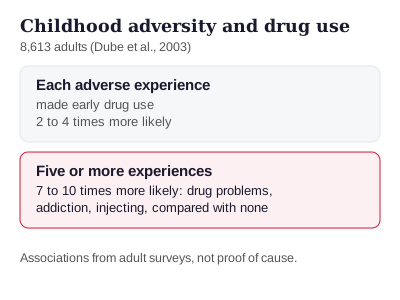
A follow-up looked at illicit drug use in 8,613 adults. Each adverse experience made early drug use two to four times more likely. People with five or more were 7 to 10 times more likely to report drug use problems, addiction to illicit drugs, or injecting drugs than people with none (Dube et al., Pediatrics, 2003).
What counts as an adverse childhood experience
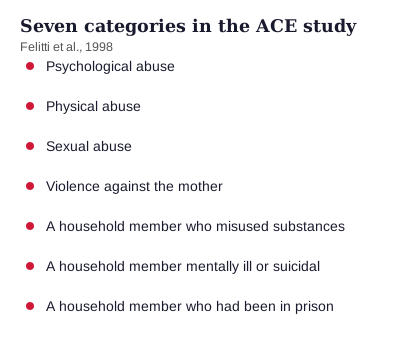
The original study covered seven categories: psychological, physical or sexual abuse; violence against the mother; and living with someone who misused substances, was mentally ill or suicidal, or had been in prison. The 2003 follow-up expanded the list to ten, adding neglect.
What the link does and does not mean
These are associations from surveys of adults recalling their childhood. They show that trauma and addiction travel together and that risk climbs with each added experience. They do not show that trauma makes addiction inevitable, and treatment works for people who carry both.
Seeking Safety: What It Is and What the Evidence Shows
Seeking Safety is the treatment most people find when they search for help with trauma and addiction together. It was developed by psychologist Lisa Najavits as a present-focused program: it teaches coping skills and safety in the here and now, rather than asking people to revisit the trauma in detail.
Is Seeking Safety effective?
The honest answer has two parts.
What the reviews say
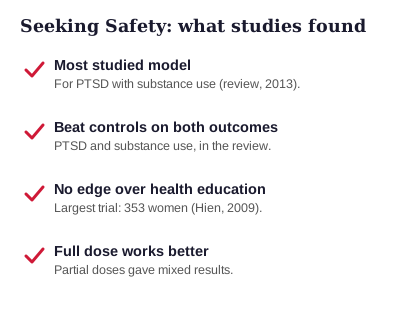
- A comprehensive review of treatments for co-occurring PTSD and substance use, co-written by its developer, called Seeking Safety "the most studied model" and "the only treatment outperforming a control on both PTSD and SUD". It also found that partial doses had "more mixed results than the full dose" (Najavits and Hien, 2013).
What the largest trial found
- The largest single trial, run in NIDA's Clinical Trials Network with 353 women, compared 12 sessions of Seeking Safety with a women's health education group. Both groups showed large drops in PTSD symptoms, with "no reliable difference between conditions", and substance use did not differ between them. Participants attended about six of the twelve sessions on average (Hien et al., 2009).
What this means if you are choosing a program
Read together: Seeking Safety is a reasonable, well-studied option, especially when delivered in full, but it has not consistently beaten simpler supportive groups. Attendance matters as much as the model.

Can You Do Trauma Therapy During Addiction Treatment?
The COPE trial
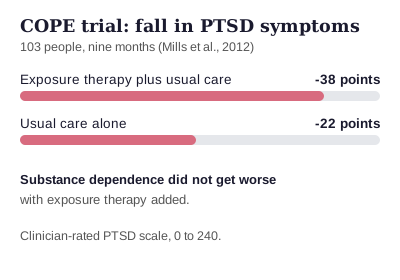
For years the worry was that talking through trauma in detail would trigger relapse. A randomized trial tested that directly. In COPE, 103 people with both PTSD and substance dependence received usual addiction treatment, and half also had 13 sessions of prolonged exposure therapy, each 90 minutes long. After nine months, the exposure group's PTSD symptoms had fallen significantly more, and substance dependence had not got worse. The authors concluded that the integrated treatment improved PTSD "without an increase in severity of substance dependence" (Mills et al., JAMA, 2012).
What a review of 14 trials found
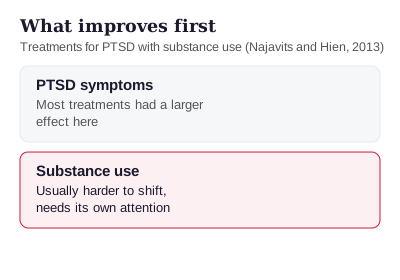
A systematic review of 14 trials points the same way: trauma-focused therapy "delivered alongside SUD intervention" reduced PTSD severity, with an effect on drug and alcohol use at five to seven months. Its cautions were fewer people completing trauma-focused treatment and low-quality evidence overall (Roberts et al., 2015). The review by Najavits and Hien adds that most treatments "had more effect on PTSD than SUD, suggesting SUD is harder to treat".
Integrated, not sequential
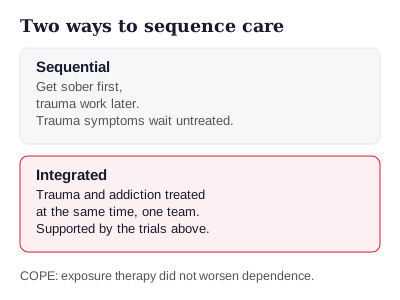
The practical lesson from these studies is that you do not have to get sober first and deal with trauma later. Both can be treated at the same time, by a team that knows how to do both.
Trauma Treatments Compared
| Approach | What it focuses on | What studies found |
|---|---|---|
| Seeking Safety | Coping and safety in the present, no detailed trauma retelling | Most studied; beat controls on both PTSD and substance use in a review; no better than health education in the largest trial |
| COPE (prolonged exposure plus addiction treatment) | Working through trauma memories in 13 sessions alongside usual care | Greater fall in PTSD symptoms; substance dependence did not worsen |
| Trauma-focused cognitive behavioral therapy | Changing trauma-related thoughts and avoidance | Reduced PTSD alongside addiction treatment; fewer people completed it |
Our article on CBT for addiction covers the skills side of trauma-focused work in more detail.
How Many Treatment Programs Offer Trauma Care
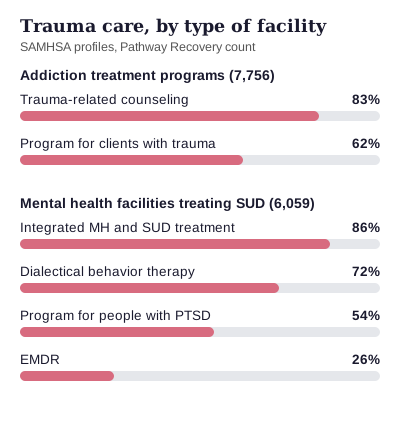
We read the SAMHSA service profiles of the programs in our directory that treat substance use. They come from two different questionnaires: 7,756 profiles from addiction treatment facilities and 6,059 from mental health facilities that also treat substance use. The two questionnaires ask about trauma in different ways, so we count each group against itself.
Addiction treatment programs
Trauma counseling is the norm, not the exception: 83% of addiction treatment programs list trauma-related counseling. It is close to universal in programs built for groups with high trauma exposure.
| Addiction treatment programs | List trauma-related counseling |
|---|---|
| All 7,756 programs | 6,468 (83%) |
| With a program for survivors of sexual abuse | 3,578 of 3,826 (94%) |
| With a program for survivors of domestic or partner violence | 3,522 of 3,795 (93%) |
| With a program for adolescents | 2,315 of 2,501 (93%) |
| With a program for veterans | 3,250 of 3,571 (91%) |
| With a program for adult women | 4,390 of 4,908 (89%) |
| With residential care | 1,521 of 1,744 (87%) |
Mental health facilities that treat substance use
Their questionnaire asks about specific programs and therapies instead. Of the 6,059 facilities, 86% list integrated mental health and substance use treatment, 72% list dialectical behavior therapy, 54% list a program for people with PTSD and 26% list EMDR. Among those with a PTSD program, 35% offer EMDR.
Trauma care by state
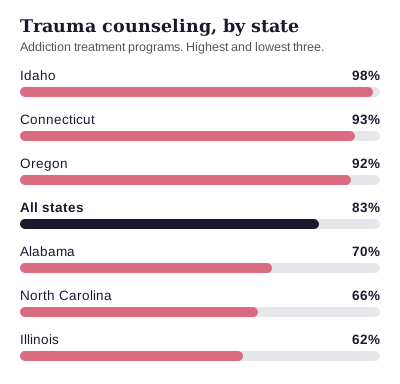
Among addiction treatment programs, trauma-related counseling is listed by 98% in Idaho and 93% in Connecticut, against 66% in North Carolina and 62% in Illinois. Among mental health facilities, a program for people with PTSD ranges from 80% in Mississippi to 16% in Minnesota.
Method: Pathway Recovery editorial team, counted October 15, 2026. Source is the service profile each facility files with the SAMHSA Treatment Services Locator (FindTreatment.gov). We sorted profiles by questionnaire (addiction treatment or mental health) and counted a service only against facilities whose questionnaire asks about it; a service is counted when it appears in the profile word for word. 325 profiles whose questionnaire could not be identified were left out.
Because almost every addiction program lists trauma counseling, the label alone tells you little. The questions below tell you more. You can check what a facility reports on its page in our state directory, and read more about treating both conditions together under dual diagnosis treatment.
Questions to Ask a Program About Trauma Care
"Trauma-informed" appears on many program websites. These questions show what is behind it.
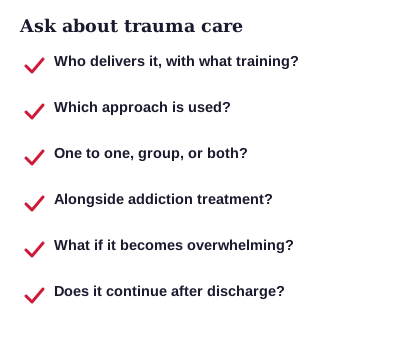
- Who delivers the trauma therapy, and what training do they have in it?
- Which approach do you use: Seeking Safety, exposure-based therapy, trauma-focused CBT, or another?
- Is it one to one, in a group, or both?
- Is trauma work done alongside addiction treatment, or only after a period of abstinence?
- What happens if the trauma work becomes overwhelming partway through?
- Will trauma care continue after I leave the program?
The Evidence Base: What Research Tells Us
Modern addiction treatment is grounded in decades of clinical research. Randomized controlled trials, longitudinal outcome studies, and real-world effectiveness data have established clear evidence for what works, and what doesn't, in treating substance use disorders. Understanding this evidence helps individuals and families evaluate treatment options critically and choose programs most likely to produce lasting results.
The NIDA Principles of Drug Addiction Treatment identifies several key evidence-based findings: addiction is a complex but treatable brain disorder; no single treatment is appropriate for everyone; treatment needs to be readily available and retained for an adequate period of time; effective treatment addresses multiple needs beyond substance use; medications are an important element of treatment for many patients; behavioral therapies including CBT are the most commonly used forms of addiction treatment; and treatment must be monitored and modified as necessary.
These principles inform best practices across all treatment settings and substance types. Programs that align with these evidence-based principles consistently produce better outcomes than those relying on unvalidated approaches, ideology, or tradition alone. When evaluating treatment options, ask specifically how the program incorporates these research-backed principles into its clinical programming.
Need Help Finding Treatment?
Our counselors are available 24/7 to help you find the right program.
Practical Considerations and What to Expect
Navigating the practical aspects of treatment can feel overwhelming, but understanding common processes and expectations reduces anxiety and facilitates better decision-making. Whether you are considering residential treatment, outpatient programs, or other care options, several universal practical considerations apply.
Assessment and intake: Quality treatment programs begin with a comprehensive assessment that evaluates substance use history, medical conditions, psychiatric symptoms, social circumstances, and treatment goals. This assessment informs an individualized treatment plan tailored to your specific needs, not a one-size-fits-all curriculum.
Duration of treatment: Research consistently shows that longer treatment engagement produces better outcomes. The National Institute on Drug Abuse recommends a minimum of 90 days for most treatment modalities. However, treatment duration should be based on individual progress rather than arbitrary timelines. Some individuals benefit from 6-12 months or longer of structured care, particularly when co-occurring conditions complicate recovery.
Insurance and cost: Most insurance plans cover addiction treatment under federal parity laws. The treatment center's admissions team can verify your specific benefits and help you understand expected costs. Financial concerns should not prevent you from seeking treatment, numerous options exist for individuals at every income level.
Family involvement: Family participation significantly improves treatment outcomes. Most quality programs offer family therapy, education sessions, and support for loved ones. Engaging family members early in the treatment process builds the supportive home environment that sustains long-term recovery.
Treatment Approaches and Therapeutic Methods
Effective treatment for substance use disorders employs multiple evidence-based therapeutic approaches, typically combined within a comprehensive treatment plan. Understanding the major modalities helps you evaluate programs and participate more actively in your own care.
Cognitive-Behavioral Therapy (CBT) helps individuals identify the thoughts, beliefs, and behavioral patterns that drive substance use. By learning to recognize triggers, challenge distorted thinking, and develop healthier coping strategies, clients build skills that serve them throughout recovery. CBT has one of the strongest evidence bases of any addiction treatment modality.
Motivational Interviewing (MI) is a collaborative conversation style that strengthens a person's own motivation for change. Rather than telling someone what they should do, MI helps individuals articulate their own reasons for wanting recovery and resolve ambivalence about change. This approach is particularly effective in early treatment when motivation may be fragile.
Group therapy provides peer support, accountability, shared learning, and the experience of being understood by others facing similar challenges. Most treatment programs incorporate group therapy as a central element, with groups focused on various topics including relapse prevention, coping skills, trauma processing, and life skills development.
12-step and mutual aid programs including AA, NA, and SMART Recovery provide ongoing peer support that extends well beyond formal treatment. These programs are freely available, widely accessible, and provide a framework for sustained recovery that millions of people have found invaluable.
Holistic and complementary approaches including mindfulness meditation, exercise therapy, nutritional counseling, yoga, art therapy, and equine therapy can complement evidence-based treatments. While these approaches should not replace core therapies, they can enhance overall wellbeing and provide additional tools for managing stress and emotions in recovery.
Building Long-Term Recovery
Completing a treatment program is a crucial milestone, but sustained recovery requires ongoing effort, support, and vigilance. Research published in the Journal of Substance Abuse Treatment demonstrates that the first year following treatment completion is the highest-risk period for relapse, with risk decreasing significantly after five years of sustained sobriety. Building a robust recovery support system during and after treatment is essential.
Aftercare planning should begin well before treatment discharge. A comprehensive aftercare plan includes: ongoing therapy (individual and/or group), medication management if applicable, support group participation, sober living arrangements if needed, employment or educational support, family therapy, recreational and social activities that support sobriety, and a written relapse prevention plan with specific triggers, coping strategies, and emergency contacts.
Lifestyle changes form the foundation of sustainable recovery. Regular physical exercise reduces cravings and improves mood. Proper nutrition supports brain healing. Adequate sleep restores cognitive function and emotional regulation. Mindfulness practices build awareness and stress tolerance. These lifestyle elements are not "nice to have" additions, they are evidence-based recovery tools with documented effectiveness.
Meaningful connection, with a sponsor, therapist, support group, family, and sober friends, provides the social scaffolding that sustains recovery through difficult times. Isolation is one of the most dangerous states in recovery; intentional community engagement is the antidote.
Take the First Step Today
Evidence shows early intervention leads to better outcomes.
Taking Action: Your Next Steps
Knowledge without action changes nothing. If you or someone you love is struggling with a substance use disorder, the most important thing you can do right now is take one concrete step toward help. That step might be making a phone call, attending a support group meeting, scheduling an appointment with an addiction specialist, or simply having an honest conversation with someone you trust.
The path to recovery is different for everyone, and there is no single "right" way to begin. What matters is beginning. Every person now living in long-term recovery once stood where you stand today, uncertain, perhaps afraid, but willing to take that first step.
Call to speak with a counselor who can help you understand your options, answer your questions, and connect you with treatment resources that match your specific needs. The call is free, confidential, and available 24 hours a day, 7 days a week. There is no obligation, and your privacy is protected. Help is available, and recovery is possible.